
Babel
1. 什么是 Babel
Babel 是 JavaScript 编译器,可以让开发人员在开发过程中直接使用各类方言(如 TS、Flow、JSX)或新的语法特性,不需要考虑运行环境(按需转换为低版本支持的代码)
- 语法转换
- 源代码转换
- Polyfill 实现目标环境缺少的功能
其原理是将 JS 代码转换为 AST,对 AST 应用各种插件进行处理,最终输出编译后的 JS 代码
2. AST 抽象语法树
即以树的形式表现编程语言的语法结构
这个在线调试网站可以输出 Tree 和 JSON 两种结构,可以观察到生成的树的节点、节点类型、节点属性能内容
const name = olu;{ "type": "Program", "start": 0, "end": 55, "body": [ { "type": "VariableDeclaration", "start": 0, "end": 14, "declarations": [ { "type": "VariableDeclarator", "start": 4, "end": 14, "id": { "type": "Identifier", "start": 4, "end": 8, "name": "name" }, "init": { "type": "Identifier", "start": 11, "end": 14, "name": "olu" } } ], "kind": "const" } ], "sourceType": "module"}使用树来进行分析或转换可以使得程序中的每一节点恰好被访问一次(前序或后序遍历)
常见使用场景是代码压缩混淆,通过分析 AST,基于各种规则进行优化、移除不可访问代码、移除 debugger 等
3. Babel 编译流程
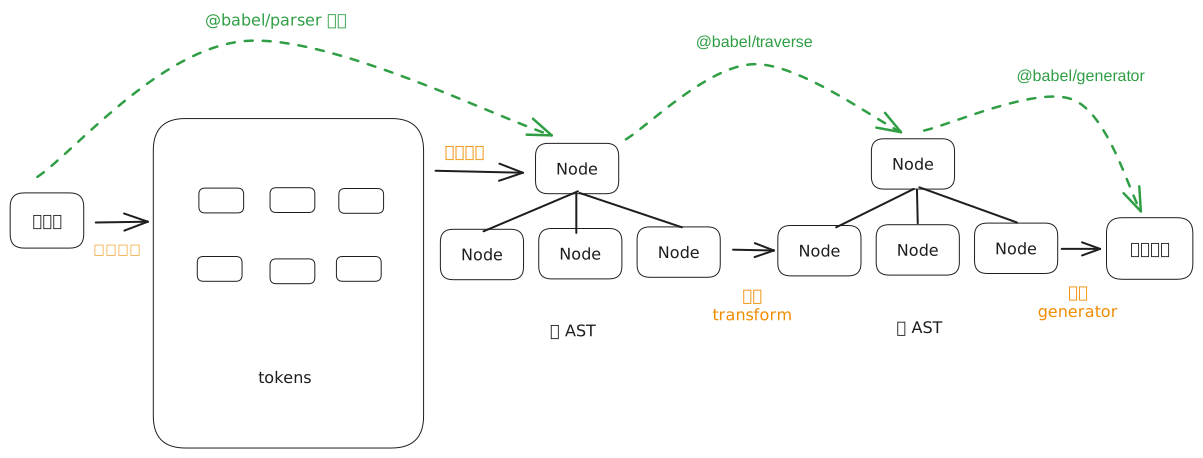
3.1 解析阶段(Parser)
Babel 默认使用@babel/parser将代码转换为 AST
- 词法分析:对输入的字符序列做标记化(tokenization)操作(将 js 代码字符串进行词法分析生成一系列
tokens) - 语法分析:处理标记于标记之间的关系,最终形成一颗完整的 AST 结构(将上一步的 tokens 进行组合)
3.2 转换阶段(Transformer)
Babel 使用@babel/traverse提供的方法对 AST 进行深度优先遍历,调用插件对关注节点的处理函数,按需对 AST 节点进行增删改处理,将新的 js 语法节点转化成浏览器兼容的语法节点
3.3 生成阶段(Generator)
Babel 默认使用@babel/generator将上一阶段深度遍历处理后的 AST 转换为代码字符串
4. Babel 插件系统
Babel 的核心模块是 @babel/core,@bable/parser,@babel/traverse和@babel/generator,这些模块提供了完整的编译流程
转换逻辑则需要插件来完成,使用 Babel 时,可以通过配置文件指定 plugin 和 preset
preset 可以是 plugin 和 preset 以及其他配置的集合
Babel 会递归读取 preset,最终获取一个大的 plugin 数组,用于后续使用
4.1 常见 preset
- @babel/preset-env
- @babel/preset-typescript
- @babel/preset-react
- @babel/preset-flow
4.1.1 @babel/preset-env
其中的 @babel/preset-env 智能预设是最常见的,它包含了一组最新浏览器已支持的 ES 语法特性,并且可以通过配置目标运行环境范围,自动按需引入插件
内部集成了绝大多数 plugin (Stage > 3)的分析转换插件
::: caution @babel/preset-env 不包含低于 Stage 3 的 JavaScript 语法提案,如果需要兼容则要额外引对应的 Plugin
@babel/preset-env 仅针对语法阶段分析转换,如 const、let、箭头函数这种的。对于一些 Api 或者 ES6 内置模块的 polyfill 无法处理 :::
4.1.2 @babel/preset-react
在开发 React 项目编写 jsx 时,本质上 jsx 最后会被编译成 React.createElement()
@babel/preset-react 预设就是对 jsx 进行分析转换
4.1.3 @babel/preset-typescript
@babel/preset-typescript 顾名思义是对 ts 代码进行分析转换
4.2 常见 plugin
大多数常见的 plugin 都已经集成在 @babel/preset-env 中了,如果我们发现项目不能支持某些新的 js 语法时,可以查 babel plugin list 找到对应的插件,插入到我们的 babel 配置中
比较重要常见的插件有 @babel/plugin-transform-runtime
4.3 基建 Babel 配置
日常项目我们主要会涉及到三个插件
- babel-loader
- @babel/core
- @babel/preset-env
4.3.1 babel-loader
webpack 中 loader 本质是一个函数,接受源代码作为入参同时返回新内容
所以 babel-loader 本质是一个函数
@babel/core 是编译代码的核心库,可以将代码进行词法分析--语法分析--语义分析生成 AST 抽象语法树(相当于@babel/parse和@babel/generator的合体,类似 js 编译相关的 esprima 和 escodegen 两个库)
@babel/core通过 transform 方法进行转换编译
babel.transform(code, options, function (err, result) {  result; // => { code, map, ast }});
babel.transform("code();", options, function (err, result) { result.code; result.map; result.ast;});它支持同步和异步
上面的 transform 方法是直接接受字符串,transformFile 方法可以接受 js 文件路径
babel.transformFile(filename, options, callback);
babel.transformFile("filename.js", options, function (err, result) { result; // => { code, map, ast }});let babel = require("@babel/core");
function babelLoader(sourceCode, options) { // 通过transform方法编译传入的源代码 babel.transform(sourceCode); return targetCode;}4.3.2 @babel/core
4.4 编写 Babel 插件
Babel 插件的写法借助访问者模式对关注的节点定义处理函数,下面是一个例子
module.exports = function () { return { pre() { // 在 visitor 下挂载各种节点类型的监听方法 visitor: { /** * 对 Identify 类型的节点进行处理 * @param {NodePath} path */ Identifier(path) { path.node.name = path.node.name.toUpperCase() } }, post() {} } }}使用 Babel 插件的效果是:
// index.jsfunction olu() {}
// .babelrc{ "plugins": ["babel-plugin-testpluginname"]}function OLU() {}4.5 Babel 转换阶段
转换阶段,Babel 相关方法会获得一个插件数组变量,用于后续操作。插件结构接口如下:
interface Plugin { key: string | undefined | null; post: Function | void; pre: Function | void; visitor: Object; parserOverride: Function | void; generatorOverride: Function | void;}转换阶段,Babel 会按照以下顺序执行
- 执行所有插件的 pre 方法
- 按需执行 visitor 中的方法
- 执行所有插件的 post 方法
function* transformFile(file: File, pluginPasses: PluginPasses): Handler<void> {  for (const pluginPairs of pluginPasses) {    const passPairs = [];    const passes = [];    const visitors = [];
    for (const plugin of pluginPairs.concat([loadBlockHoistPlugin()])) {      const pass = new PluginPass(file, plugin.key, plugin.options);
      passPairs.push([plugin, pass]);      passes.push(pass);      visitors.push(plugin.visitor);    }
    for (const [plugin, pass] of passPairs) {      const fn = plugin.pre;      if (fn) {        const result = fn.call(pass, file);
        // @ts-expect-error - If we want to support async .pre        yield* [];
        if (isThenable(result)) {          throw new Error(            `You appear to be using an plugin with an async .pre, ` +              `which your current version of Babel does not support. ` +              `If you're using a published plugin, you may need to upgrade ` +              `your @babel/core version.`          );        }      }    }
    // merge all plugin visitors into a single visitor    const visitor = traverse.visitors.merge(      visitors,      passes,      file.opts.wrapPluginVisitorMethod    );    traverse(file.ast, visitor, file.scope);
    for (const [plugin, pass] of passPairs) {      const fn = plugin.post;      if (fn) {        const result = fn.call(pass, file);
        // @ts-expect-error - If we want to support async .post        yield* [];
        if (isThenable(result)) {          throw new Error(            `You appear to be using an plugin with an async .post, ` +              `which your current version of Babel does not support. ` +              `If you're using a published plugin, you may need to upgrade ` +              `your @babel/core version.`          );        }      }    }  }}
写 Babel 插件主要使用 visitor 对象,这个 visitor 对象中会编写对于关注的 AST 节点的处理逻辑
上述执行顺序中第二步的 visitor 对象是整合自各插件的 visitor,最终形成的一个大的 visitor 对象,数据结构大致参考下面接口
// 书写插件时的 visitor 结构interface VisitorInPlugin {  [ASTNodeTypeName: string]:    | Function    | {        enter?: Function;        exit?: Function;      };}
// babel 最终整合的 visitor 结构interface VisitorInTransform {  [ASTNodeTypeName: string]: {    // 不同插件对相同节点的处理会合并为数组    enter?: Function[];    exit?: Function[];  };}
对 AST 进行深度优先遍历时,会创建 TraversalContext 对象来把控对 NodePath 节点的访问,访问时调用对节点所定义的处理方法,从而实现按需执行 visitor 中的方法
// ...traverse.node = function (  node: t.Node,  opts: TraverseOptions,  scope?: Scope,  state?: any,  parentPath?: NodePath,  skipKeys?) {  const keys = t.VISITOR_KEYS[node.type];  if (!keys) return;
const context = new TraversalContext(scope, opts, state, parentPath); for (const key of keys) { if (skipKeys && skipKeys[key]) continue; if (context.visit(node, key)) return; }};// ...import NodePath from "./path";import * as t from "@babel/types";import type Scope from "./scope";
export default class TraversalContext { constructor(scope, opts, state, parentPath) { this.parentPath = parentPath; this.scope = scope; this.state = state; this.opts = opts; }
declare parentPath: NodePath; declare scope: Scope; declare state; declare opts; queue: Array<NodePath> | null = null; priorityQueue: Array<NodePath> | null = null;
/** * This method does a simple check to determine whether or not we really need to attempt * visit a node. This will prevent us from constructing a NodePath. */
shouldVisit(node): boolean { const opts = this.opts; if (opts.enter || opts.exit) return true;
// check if we have a visitor for this node if (opts[node.type]) return true;
// check if we're going to traverse into this node const keys: Array<string> | undefined = t.VISITOR_KEYS[node.type]; if (!keys?.length) return false;
// we need to traverse into this node so ensure that it has children to traverse into! for (const key of keys) { if (node[key]) return true; }
return false; }
create(node, obj, key, listKey?): NodePath { // We don't need to `.setContext()` here, since `.visitQueue()` already // calls `.pushContext`. return NodePath.get({ parentPath: this.parentPath, parent: node, container: obj, key: key, listKey, }); }
maybeQueue(path, notPriority?: boolean) { if (this.queue) { if (notPriority) { this.queue.push(path); } else { this.priorityQueue.push(path); } } }
visitMultiple(container, parent, listKey) { // nothing to traverse! if (container.length === 0) return false;
const queue = [];
// build up initial queue for (let key = 0; key < container.length; key++) { const node = container[key]; if (node && this.shouldVisit(node)) { queue.push(this.create(parent, container, key, listKey)); } }
return this.visitQueue(queue); }
visitSingle(node, key): boolean { if (this.shouldVisit(node[key])) { return this.visitQueue([this.create(node, node, key)]); } else { return false; } }
visitQueue(queue: Array<NodePath>) { // set queue this.queue = queue; this.priorityQueue = [];
const visited = new WeakSet(); let stop = false;
// visit the queue for (const path of queue) { path.resync();
if ( path.contexts.length === 0 || path.contexts[path.contexts.length - 1] !== this ) { // The context might already have been pushed when this path was inserted and queued. // If we always re-pushed here, we could get duplicates and risk leaving contexts // on the stack after the traversal has completed, which could break things. path.pushContext(this); }
// this path no longer belongs to the tree if (path.key === null) continue;
// ensure we don't visit the same node twice const { node } = path; if (visited.has(node)) continue; if (node) visited.add(node);
if (path.visit()) { stop = true; break; }
if (this.priorityQueue.length) { stop = this.visitQueue(this.priorityQueue); this.priorityQueue = []; this.queue = queue; if (stop) break; } }
// clear queue for (const path of queue) { path.popContext(); }
// clear queue this.queue = null;
return stop; }
visit(node, key) { const nodes = node[key]; if (!nodes) return false;
if (Array.isArray(nodes)) { return this.visitMultiple(nodes, node, key); } else { return this.visitSingle(node, key); } }}https://github.com/babel/babel/tree/bc1b9537b00499f462aa3ac0d49e30314a66f413/packages/babel-traverse